

Open-bust shapewear should fit around your bra without changing how that bra sits. Start with a bra that feels comfortable on its own, add the shaping garment according to its instructions, then check the opening, underband, sides and straps while standing and sitting. If the combination folds a cup, displaces a wire or creates uncomfortable pressure, it is not a good fit simply because the waist looks smooth.
This guide is for the specific fitting stage: you have decided to wear your own bra and want to know whether an open-bust garment works around it. For a broader comparison of integrated support, use our built-in-bra bodysuit guide.
What should you check before combining the two garments?
Check your bra first, without the shapewear. Notice where its band sits, how the cup edges lie and whether the straps feel comfortable. That gives you a useful baseline: after adding another layer, you can recognise what has changed.
Use the bra you actually intend to wear with the outfit. A full-cup bra, a plunge and a longline design occupy different amounts of space around the chest. A shaping garment that frames one neatly may meet another at the wrong point.
Inspect the open-bust garment's front, side and back views before ordering. Look for the opening's shape, the side height and the strap position. Do not assume that an open chest also means a low back or hidden straps.
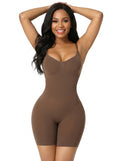
Our Open Bust Shapewear Bodysuit is an option to compare if you want to wear your own bra. Its listing describes extra-firm tummy control, so assess that hold separately from the fit around your bra. Stronger shaping does not establish better bra compatibility.

Does the opening clear the bottom of your bra cups?
The lower edge of the opening should not fold the cups or push their lower edges into an uncomfortable position. Check this with your shoulders relaxed rather than pulling yourself into a pose that makes the layers look flatter.
Look directly beneath each cup. Is the shaping fabric sitting below it, or riding over the cup's edge? If the bra has wires, check whether they remain where they sat comfortably before you added the bodysuit. Pressure that moves a wire onto breast tissue is a reason to stop and reconsider the combination.
A wider or deeper opening may behave differently from a narrow one, but neither is automatically better. The right shape is the one that accommodates your particular bra without disturbing it.
If you keep pulling the opening down and it immediately returns to the same uncomfortable position, do not assume it needs to be stretched harder. Check whether the garment is too short through the body or simply the wrong cut.
Keep the bra fit you already trust.
Compare the opening and body measurements before choosing a shaping layer. Comfortable cup clearance matters more than the strongest hold.
What happens where the shapewear meets the underband?
Check the two layers together for pressure and folding. A neat-looking overlap is only useful if it stays comfortable when you sit and breathe normally.
Some bras extend further below the cups than others. A longline band may share more space with the shapewear than a shorter band does. Look at the actual junction rather than assuming every bra can fit within the same opening.
Turn to inspect the back too. If the shaping garment's upper edge meets the bra band, see whether either edge rolls or shifts. A ridge through clothing may be a cosmetic issue; an edge that presses or rubs is a fit issue. Treat those as separate checks.
Do not tighten your bra to compensate for a shaping garment that is moving it. The aim is to preserve a bra fit that already works, not use one layer to force the other into place.
Are the side edges clear of the cups and underarms?
The sides should sit without pushing into the outer cups or rubbing under your arms. Check both sides individually, because the fit need not look perfectly symmetrical to feel comfortable.
Let your arms rest naturally, then raise and lower them gently. Notice whether an edge catches the bra, presses into the underarm or stays folded after you move. If the front opening looks fine but the side height feels wrong, a different cut may be more useful than a smaller size.
A bra's cup coverage and band height both influence this junction. Switching to a lower-coverage bra solely to hide a shaping garment is not a useful trade if the replacement bra no longer gives you the fit you want.
Check under the intended top as well. A sleeveless armhole can reveal an edge that remains hidden under a shirt. The fit can be comfortable and still unsuitable for that particular outfit.

How should two sets of straps sit together?
Check whether the bra straps and shaping-garment straps can sit comfortably without twisting or pushing each other outwards. Do not assume they need to occupy exactly the same line.
Where adjustment is provided, use it only within the garment's intended range. Shortening straps to lift a poorly positioned opening can introduce pressure at the shoulders or crotch. If the torso is the wrong length, strap adjustment may not solve it.
Look at the shoulders beneath your chosen outfit. A wide neckline may expose either set of straps. A narrow shoulder seam may cover one but not both. That is an outfit-coverage question, not evidence that you should tighten the straps until they disappear.
What does the seated test tell you?
Sitting shows whether the garment keeps framing your bra when your body position changes. Stand first, then sit in an ordinary chair without holding your stomach in or lifting your chest into a special position.
Check whether the opening has moved upwards, whether the underband area now presses and whether the lower body pulls. Stand again and see whether the layers settle naturally or need repeated rearranging.
Walk a few steps and reach gently forwards. The bra cups should not become distorted during ordinary movement. If every movement creates another adjustment, treat that as useful information about the combination, not a wearing technique you must learn to tolerate.
If you experience pain, numbness or difficulty breathing, stop wearing the garment. Discomfort is not evidence that the shaping is more effective.

Let your measurements guide the next step.
If the opening shifts when you sit, check body length and size before changing your bra or tightening the straps.
Is the issue size, torso length or opening shape?
Check the location of the problem before changing size. A garment that is uncomfortable around the whole body presents a different problem from one that fits the waist but catches a single cup edge.
Use the product's own measurement chart for the dimensions it requests. Your bra label cannot replace waist, hip or body-length information. Our shapewear measuring guide helps you prepare those measurements.
If the body pulls through the shoulders and crotch, investigate torso fit. If the body fits but the opening interferes with the cups, investigate the cut around the chest. If the side edges are the problem, compare their height and position rather than assuming more compression will help.
Do not buy a smaller size to make the opening grip your bra. The garment needs to fit your body, not clamp the two pieces together. For wider one-piece fit considerations, see our sculpting bodysuit fit guide.
When should you choose a separate lower-body layer instead?
If you are happy with your bra but cannot find an opening that sits comfortably around it, a lower-body foundation avoids that junction altogether. This is especially worth considering when your aim is waist or lower-tummy smoothing rather than coverage through the upper torso.
Compare our High Waist Tummy Control Knickers for a brief-style option, checking the waistband against your outfit. They are an alternative way to separate the jobs, not a guarantee of a particular result.
If the outfit itself has a low back, consult our backless-dress foundations guide. An open front cannot hide a bra band or shaping-garment back that sits above the dress.

Prefer to keep the two fits separate?
A brief-style foundation is another option when you want lower-body smoothing without a bodysuit opening around your bra.
Questions about fitting open-bust shapewear around a bra
Should the opening push my bra upwards?
Do not use pressure from the opening as proof of a good fit. Check that the cups and band remain comfortable and are not being folded or displaced by the garment.
Can I wear a longline bra with an open-bust bodysuit?
Check the actual overlap beneath the cups. A longline bra occupies more space there, so compatibility depends on the opening and the way the two layers sit when you move.
What if the opening fits standing up but digs in when I sit?
Reconsider the combination. Check torso length and the position of the opening rather than judging fit from the standing view alone.
Should I change a bra that already fits to accommodate shapewear?
Not automatically. Compare another opening shape or a separate lower-body garment before compromising on a bra fit you already trust.

Keep the fitting decision simple
Keep the bra fit as your baseline, then check cup clearance, band overlap, side edges, straps and movement in that order. The right pairing lets each garment sit comfortably without forcing the other out of position.
Before ordering, compare the open-bust bodysuit's measurements and construction with your actual bra and outfit, and read the current delivery and returns information. Choose the combination that works for your day, not just for a still photograph.


0 comments